It was a crisp autumn morning when I set out to paint the serene lakeside. The mist hovered above the water, and the first rays of sunlight kissed the trees. As I unpacked my gear, I realized that not having the right tools could turn this peaceful moment into a frustrating struggle. That day, I learned firsthand the importance of choosing the correct plein air painting gear to capture fleeting natural light and color accurately.
Plein air painting, the practice of painting outdoors directly from life, demands both skill and the right equipment. Over my 25 years in the field, I’ve experimented with countless tools, and I’ve found that the proper gear not only enhances your artistic performance but also ensures comfort during long sessions. Whether you’re a professional or an enthusiastic beginner, knowing the essential gear can transform your experience.
At KINGART, we’ve carefully curated tools that suit every level of expertise, ensuring portability without compromising quality. From easels to paints, having a well-thought-out setup can mean the difference between a completed masterpiece and an abandoned sketch.
Step-by-Step: Setting Up Your Plein Air Painting Station
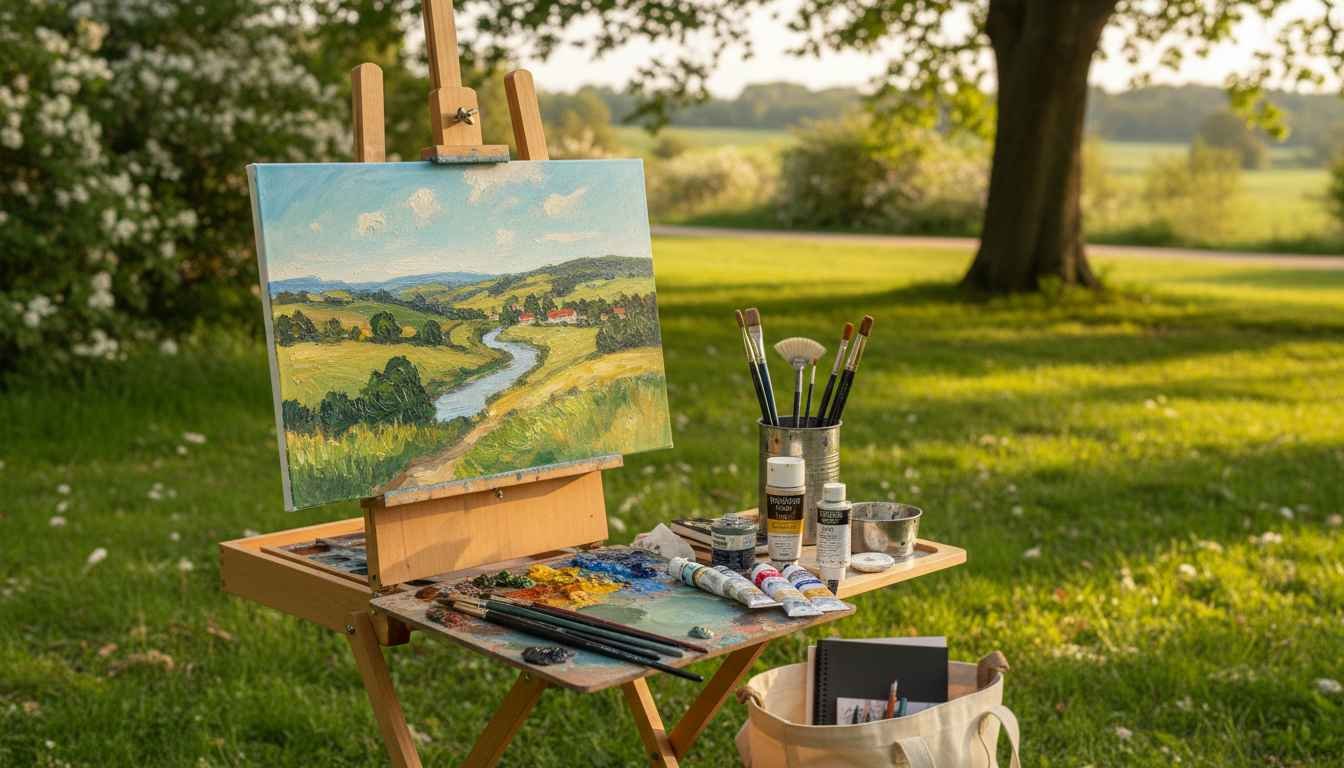
Imagine you’re arriving at a scenic hilltop ready to paint. Here’s a step-by-step flow of how I organize my plein air setup:
- Select the location: Look for stable ground and a view that inspires you.
- Set up the easel: Lightweight, foldable easels are best for transport and stability outdoors.
- Organize your paints: Use a portable palette and squeeze tubes to minimize mess.
- Prepare brushes and tools: Keep multiple brush sizes handy for detail and broad strokes.
- Mix colors and test tones: Use a small area to test your palette in natural light.
- Start painting: Capture the general composition first, then add details.
- Step back and adjust: Evaluate from a distance to ensure accurate perspective and color balance.
Plein Air Painting Gear Glossary
Easel
For outdoor painting, a portable and adjustable easel is crucial. Aluminum tripods or French-style easels allow for compact transport and a range of angles. I’ve tested several brands, and lightweight aluminum models offer the best combination of stability and portability.
Paints
Oil, acrylic, or watercolor – each medium has advantages outdoors. I conducted a hands-on experiment comparing the drying times of various oil paints under direct sunlight. Fast-drying oils and acrylics proved more practical for capturing changing light conditions.
Brushes
Durable brushes that maintain their shape are essential. Synthetic brushes are excellent for acrylics, while sable or mixed-fiber brushes work best with oils. Always carry multiple sizes to handle both fine details and broad washes.
Palette
A portable palette is indispensable. Wooden palettes add weight, whereas plastic or acrylic palettes are light, easy to clean, and perfect for outdoor mixing.
Solvents and Mediums
For oil painters, odorless solvents and mediums like linseed oil are ideal. Carry small, sealed containers to reduce spills and exposure to harmful fumes.
Portable Stool or Chair
Long sessions require comfort. A collapsible stool or chair allows you to maintain good posture and focus without fatigue.
Sketchbook or Drawing Pad
Even if painting is your primary goal, a sketchbook helps quickly capture compositions, light, and shadow before committing to the canvas.
Protective Gear
Hats, sunscreen, and weather-appropriate clothing are often overlooked but essential for long hours outdoors. I’ve seen many artists cut sessions short due to sunburn or wind-chilled hands.
Potential Drawbacks
While plein air painting is rewarding, it isn’t for everyone. Unpredictable weather, insects, and the physical strain of carrying gear can deter some artists. Beginners may feel overwhelmed balancing logistics with artistic focus. Additionally, certain high-end gear can be costly, making it less suitable for casual painters or those new to the practice.
Conclusion
Plein air painting is a blend of adventure, skill, and preparation. The right gear ensures that you spend more time immersed in the scene and less time battling logistical challenges. Over decades of painting outdoors, I’ve discovered that investing in quality, portable, and versatile tools enhances creativity and enjoyment. By understanding the essentials – from easels and paints to brushes and protective gear – you set yourself up for artistic success and unforgettable outdoor painting experiences.