Learning how to declutter your home can feel overwhelming, especially when every room seems to need attention at once. The secret is to work room by room, in small sessions, rather than trying to transform the whole house in a single weekend. Decluttering is not about throwing everything away or living in an empty room. It is about keeping what you use and love, and letting go of the rest, so your home supports your life instead of weighing it down. This guide walks through how to declutter your home room by room, with practical steps that actually stick.
Start With One Room and a Clear Plan
Choose the room that bothers you most, or the one you spend the most time in, and start there. A visible win in one room motivates you for the next, while trying to do everything at once usually ends in half-finished piles everywhere. Before you begin, gather three boxes or bags: one for things to keep elsewhere, one for things to donate, and one for rubbish. Work through the room in sections, such as one shelf or one drawer at a time, and finish each section before moving on.
For every item, ask three simple questions: have I used it in the past year, do I love it, and would I buy it again today? If the answer to all three is no, it belongs in the donate or rubbish bag. Sentimental items are the hardest, so set them aside in a single box to decide later, rather than letting them stall the whole room. The goal of a first pass is progress, not perfection, and you can always do a second pass later with fresh eyes.
Declutter the Living Room First
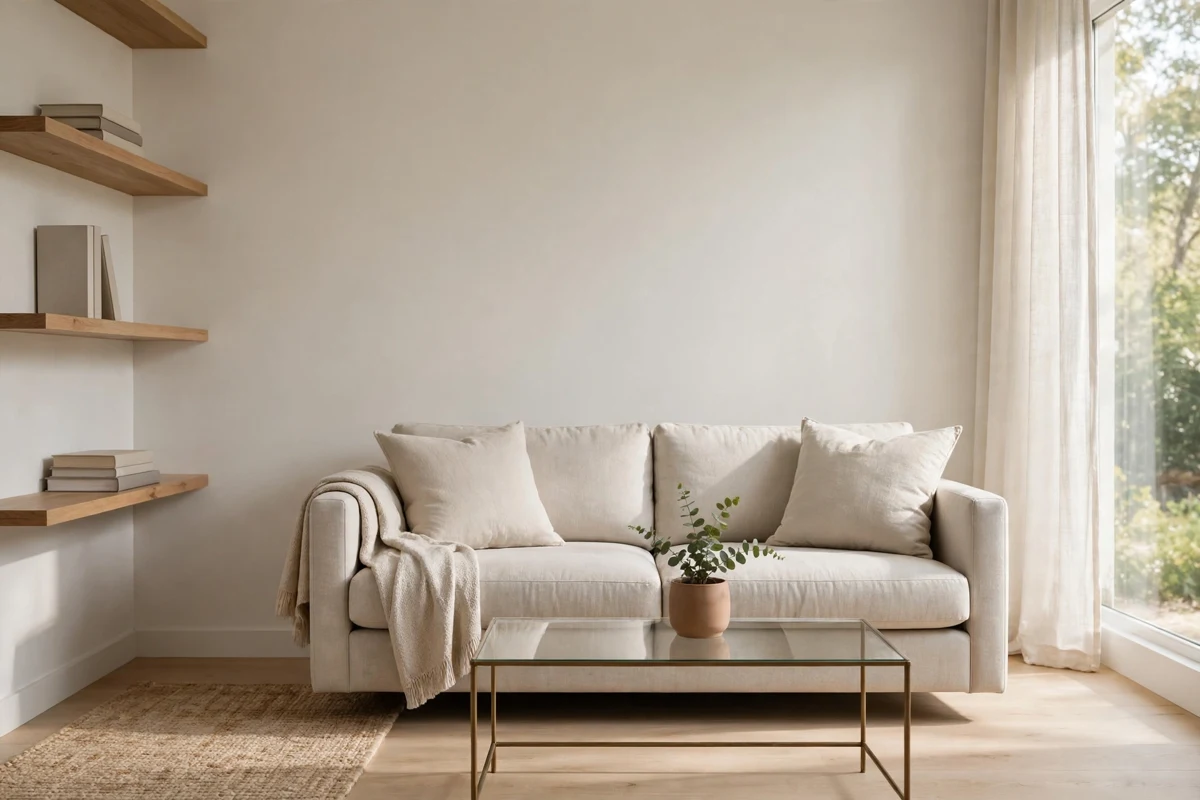
The living room is often the best place to start, because it is shared, visible, and the room where clutter is most felt. Clear flat surfaces first: coffee tables, shelves, and side tables collect objects faster than anywhere else, and clearing them changes how the whole room feels. Keep only what the room genuinely needs: seating, lighting, and a few things you enjoy looking at. Everything else should have a home elsewhere, or leave the house.
Once surfaces are clear, look at larger items with fresh eyes. Furniture that no longer fits how you live, such as an oversized unit or a chair nobody sits in, frees more space than a hundred small objects. Soft furnishings matter too: cushions, throws, and colour choices shape how calm a room feels, and how colour creates a cosy home shows how a thoughtful palette can make a decluttered room feel warm rather than bare. Interior ideas for cosy living offer the same lesson: a room feels cosy because of a few well-chosen things, not because of many things.
Bedrooms, Kitchens, and Small Spaces
Bedrooms benefit most from a calm, simple approach. Clear the wardrobe first, removing anything unworn for a year, then bedside tables and drawers. A bedroom with clear surfaces and only the essentials promotes better rest, which is reason enough to prioritise it. Kitchens need a different logic: keep only the tools and crockery you actually use, store rarely used items out of reach, and clear worktops so cooking feels pleasant rather than cramped.
Small homes need smarter storage rather than more storage. Interior hacks for compact homes show how vertical space, multi-use furniture, and hidden storage make small rooms work harder, and the same principles apply to any home. The mindset behind it all is minimalism, not as an extreme, but as a habit: the art of minimalist living is really about choosing fewer, better things. And decluttering pairs beautifully with travel: solo travel tips for first-time travellers remind us that a tidy home is a wonderful thing to return to, and that packing light starts with owning less.
Keep It Decluttered
Decluttering once is easy compared to keeping a home decluttered, because new things arrive constantly. The simplest maintenance rule is one-in, one-out: whenever something new enters the home, something old leaves. A second rule is a weekly ten-minute tidy, going through one small area each week, which prevents clutter from building back up unnoticed. A third is a seasonal review, going through the whole home four times a year and removing what no longer earns its place.
Be patient with yourself and with others in the home. Decluttering is personal, and what feels like clutter to one person may feel like treasure to another. Agree on shared spaces together, and let each person decide their own private spaces. A decluttered home is not a show home. It is a home where everything has a place, where cleaning is easier, where finding things takes seconds, and where the space itself feels calmer. Done room by room, patiently, that home is within reach for anyone.
Decluttering With Family
Decluttering a shared home needs agreement, because what feels like clutter to one person may feel like treasure to another. Start with shared spaces together, such as the living room and kitchen, where everyone benefits from clearer surfaces and better storage. For personal spaces, let each person decide their own belongings, and resist the urge to declutter someone else’s things without asking. Children can be involved too, with simple choices such as picking five toys to donate, which teaches generosity as well as tidiness.
When opinions differ, compromise works better than conflict. A box for disputed items, reviewed after a month, often resolves disagreements on its own: if nobody missed the item, it can go, and if someone did, it stays with a proper home. Decluttering together, at a relaxed pace, can even become a bonding activity, especially when everyone sees the shared spaces improve. The goal is a home that works for everyone in it, not a home that matches one person’s ideal.
What to Do With What You Remove
Removed items should leave the house promptly, or they tend to creep back. Donate usable items to charity shops, shelters, or community groups, where they help others rather than gathering dust. Sell valuable items through local marketplaces, but set a deadline: if something has not sold in two weeks, donate it rather than storing it indefinitely. Recycle what cannot be reused, and throw away only what is genuinely broken or unusable.
Handling removals responsibly completes the decluttering process and makes it feel good rather than wasteful. Knowing that your unwanted things help someone else, or at least avoid landfill, removes much of the guilt that makes letting go difficult. Bag donations as you go, label them, and drop them off at the end of each room rather than letting bags pile up. A decluttered room, plus a car boot full of donations on their way to a new home, is one of the most satisfying feelings a home project can offer.