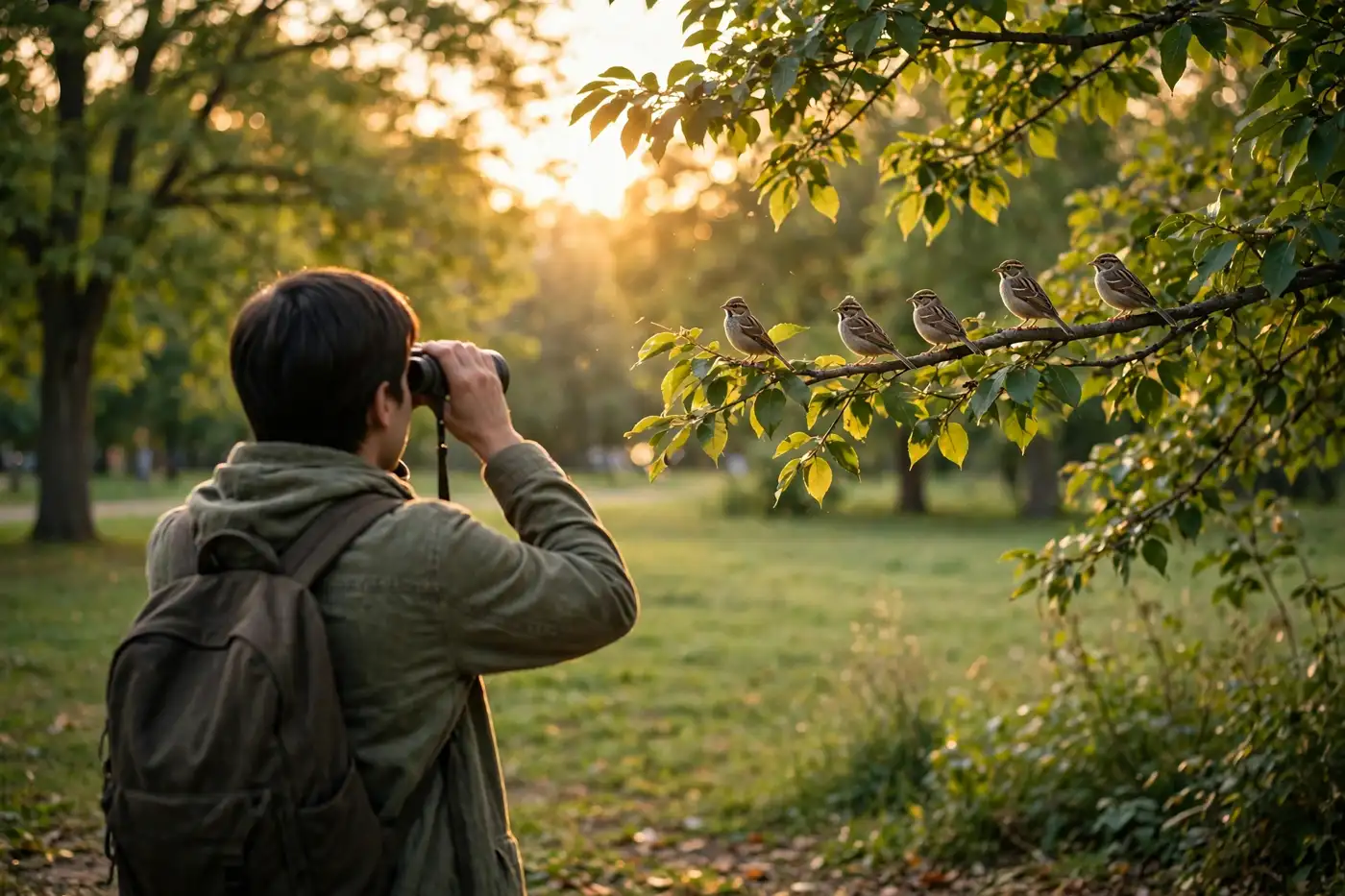
Birdwatching for beginners starts with a surprisingly simple discovery: the birds were always there — you just were not looking yet. The moment you begin paying attention, a walk to the shops turns into a small expedition, full of colour, song and behaviour you had walked past a hundred times. Birdwatching is one of the most accessible hobbies in the world: it costs almost nothing, works in any country and any season, and rewards you from the very first outing. This guide covers what you need, how to actually find and identify birds, and how to turn casual glances into a lifelong habit.
Why Birdwatching Hooks People So Quickly
Few hobbies combine so many pleasures at once. Birdwatching gets you outdoors and moving gently, sharpens your senses, and gives your mind a rest that screens never provide. There is also a collector’s joy in it: every new species you identify is a small achievement, and there are always more to find, in every season and every place on Earth.
It also changes how you experience familiar landscapes. The quiet, attentive mood in our reflection on golden hours and green thoughts is exactly the state birdwatchers cultivate — slowing down until the natural world starts showing you things. And because birds are everywhere, the hobby travels with you: the skills you learn in a local park work just as well on the wild journeys described in into the heart of the wild.
The Only Gear You Really Need to Start
Begin with your eyes and ears — genuinely, that is enough for your first weeks. When you are ready for one purchase, make it binoculars. A magnification of 8×42 is the classic beginner’s choice: bright, steady and wide enough to follow moving birds. You do not need an expensive pair; a modest, well-reviewed set will show you markings and colours that transform a distant speck into an identifiable bird.
Add a field guide or a bird identification app for your region, a small notebook, and patience. That is the whole kit. Comfortable shoes, neutral-coloured clothing and a hat matter more than specialist equipment — birds notice bright colours and sudden movement, so dressing quietly is a genuine technique, not a fashion tip. A camera can come later if photography tempts you; many lifelong birdwatchers never bother, preferring to watch behaviour rather than chase photographs.
Birdwatching for Beginners: Finding Birds Where You Live
The best place to start birdwatching is wherever you already are. Gardens, parks, riverbanks, cemeteries, reservoirs and even city rooftops all host birds, and familiar places teach you the common species first — the essential foundation for recognising rarities later. Visit the same local spot repeatedly: you will learn its residents, notice new arrivals with the seasons and start predicting where each species likes to feed and hide.
Timing is your secret weapon. Birds are most active in the first hours after dawn, when they sing, feed and move about; the “dawn chorus” in spring is one of nature’s great free shows. Late afternoon brings a second, smaller burst of activity. Weather matters too — the calm morning after rain is often superb, as birds emerge hungry and active. Seasonal change keeps the hobby endlessly fresh, much like the turning year in our piece on how spring awakens the soul: spring brings migrants and song, summer fledglings, autumn passage birds and winter visitors from the far north.
How to Identify What You Are Looking At
Forget memorising whole field guides. Experienced birdwatchers identify birds by a quick combination of clues: overall size and shape, colour pattern (especially the head, wings and tail), behaviour, habitat and sound. When you see an unfamiliar bird, note these features in order before reaching for the guide — a small brown bird with a streaked chest, hopping on the lawn and flicking its tail is already most of the way to a name.
Sound is half the hobby. Many birds are heard far more often than they are seen, and learning the calls of your ten commonest local species will multiply what you find on every walk. Modern apps can identify birdsong from a phone recording, which makes learning calls dramatically easier than it was a generation ago. Compare what the app suggests with your own notes, though — the discipline of observing first is what builds real skill. Keeping a simple list of species you have seen, with dates and places, turns identification into a satisfying record; reviewing it before a trip, as the travellers in our solo travel tips might before a new destination, tells you exactly which birds would be new for you there.
Watching Well: Fieldcraft and Etiquette
Good birdwatching is mostly good manners — towards birds and towards other people. Move slowly, stop often and let birds come to you; a patient watcher sitting quietly by a hedge will see far more than someone crashing through the undergrowth. Keep your voice low, avoid sudden gestures and never chase a bird for a closer look. During breeding season, keep well back from nests: a photograph or a tick on a list is never worth a failed brood.
The same respect applies to habitats and fellow watchers. Stay on paths in sensitive areas, take litter home, and share sightings generously — the birding community runs on shared knowledge, and beginners who ask questions are welcomed everywhere. If you travel for birds, the same ethics apply at famous beauty spots: the wetlands and coasts in journeys like our trip from Hanoi to Ha Long Bay host species found nowhere else, and they survive only where visitors tread lightly. Birdwatching also pairs beautifully with slow evenings outdoors — identifying the last singers at dusk, as the sky does the work in our story of sunset stories and forest dreams, is a fine way to end any day.
Your First Month of Birdwatching
Week one: simply notice. Count how many different birds you can distinguish in your garden or street, without worrying about names. Week two: add binoculars and a guide, and put names to your five commonest visitors. Week three: take one dawn walk in your best local spot and keep your first list. Week four: learn the calls of three species you see often, and try one new habitat — a lake, a wood or a stretch of coast.
By the end of the month you will probably know twenty or thirty species, own a notebook filling with dates and places, and — the surest sign the hobby has you — catch yourself identifying birds from the car, the train window and the office car park. That is the quiet magic of birdwatching: it does not add something to your life so much as reveal what was always in it. All you have to do is look up.
More Ways to Enjoy the Outdoors
Birdwatching pairs naturally with the other gentle outdoor habits on this site. Build your field stamina with our daily walking routine guide or step it up with our beginner’s guide to starting a running routine. If your watching takes you further from home, our solo travel tips for first-time travelers and smart packing tips for a long trip will help you plan the journey, and keeping your home base calm between trips is easier with our method for decluttering your home room by room.