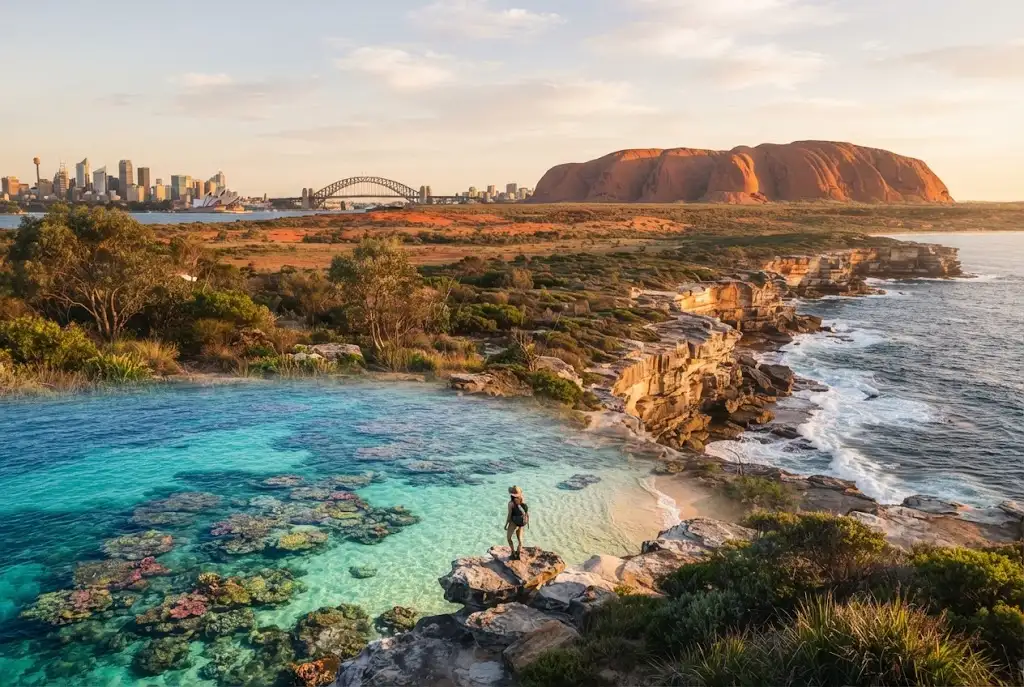
Australia’s enormous size means that different regions provide very different experiences. A coastal holiday may focus on beaches and marine life, while an inland journey can introduce travelers to Indigenous culture, desert landscapes, national parks, and remote communities. Planning around the type of experience you want can make an Australian itinerary much more rewarding.
1. Sydney, New South Wales
Sydney is one of Australia’s most recognizable destinations and an excellent starting point for first-time visitors. The city combines a famous harbor, beaches, cultural attractions, restaurants, neighborhoods, and outdoor experiences.
The Sydney Opera House and Sydney Harbour Bridge are natural highlights, while Circular Quay provides an easy starting point for exploring the harbor. Visitors can also explore The Rocks, Darling Harbour, Bondi Beach, and the Bondi to Coogee coastal route.
Sydney is particularly appealing to travelers who want to combine urban sightseeing with nature. Beaches, walking routes, parks, waterways, and nearby national parks make it possible to experience several sides of Australia without leaving the broader Sydney region.
Travelers looking for more inspiration can also explore city-based travel destinations when comparing major urban experiences around the world.
2. Great Barrier Reef, Queensland
The Great Barrier Reef is one of Australia’s most iconic natural attractions. Stretching along the Queensland coast, it offers opportunities to experience coral ecosystems and marine life through snorkeling, diving, boat tours, and island experiences.
Cairns and the Whitsundays are among the major gateways for reef experiences. The surrounding tropical environment adds another dimension to the journey, with beaches, islands, rainforests, and outdoor activities nearby.
The reef is particularly suitable for travelers interested in marine environments and nature-based experiences. Conditions and available activities vary by location and season, so visitors should check local guidance when planning reef excursions.
3. Uluru and Kata Tjuta, Northern Territory
Uluru and Kata Tjuta create one of Australia’s most distinctive landscapes. Located in the Red Centre, these enormous sandstone formations rise dramatically from the surrounding desert.
Uluru-Kata Tjuta National Park is also deeply connected with Anangu culture and the living traditions of Australia’s First Peoples. Visitors should approach cultural sites respectfully and follow park guidance during their visit.
The landscape changes dramatically throughout the day as sunlight alters the appearance of the rock formations and surrounding desert. Sunrise and sunset experiences can therefore become memorable parts of a Red Centre itinerary.
4. Melbourne, Victoria
Melbourne is a strong choice for travelers interested in culture, food, art, architecture, shopping, sporting events, and neighborhood exploration. The city has a distinctive character shaped by its cafés, galleries, museums, markets, and laneways.
Melbourne can also serve as a base for exploring attractions outside the city. Travelers can combine an urban stay with day trips or longer journeys through Victoria’s coastal and regional landscapes.
For travelers who enjoy combining major cities with natural destinations, Melbourne provides a useful contrast to Australia’s tropical Queensland and desert Northern Territory.
5. Great Ocean Road and the 12 Apostles
The Great Ocean Road is one of Australia’s most famous scenic drives. The route follows Victoria’s coastline and features dramatic cliffs, beaches, forests, coastal towns, and spectacular rock formations.
The 12 Apostles are among its best-known attractions. Despite the name, the limestone stacks have changed over time through natural coastal erosion, illustrating how dynamic the landscape remains.
A road trip along this coast allows travelers to experience the journey rather than simply visiting one attraction. Stops can include viewpoints, beaches, walking areas, forests, and small coastal communities.
Visitors interested in scenic journeys can also explore other West Coast travel destinations for additional road-trip inspiration.
6. Kakadu National Park, Northern Territory
Kakadu National Park offers a very different Australian experience. The enormous protected area includes wetlands, escarpments, wildlife habitats, waterfalls, cultural sites, and Aboriginal rock art.
Visitors can explore locations such as Ubirr and Burrungkuy, take wildlife-oriented cruises, and experience walks through different environments. Seasonal conditions can influence which areas and activities are accessible.
Kakadu is especially interesting for travelers who want to combine nature with Aboriginal cultural heritage. Rather than treating the park simply as a sightseeing destination, visitors can take time to understand the cultural and environmental significance of the region.
7. Daintree Rainforest, Queensland
The Daintree Rainforest provides a dramatic contrast to Australia’s better-known beaches and desert landscapes. Located in tropical North Queensland, the region is known for dense rainforest, rivers, wildlife, and spectacular natural scenery.
Visitors can experience rainforest walks, guided tours, river environments, and coastal viewpoints. The surrounding region also makes it possible to combine rainforest exploration with experiences around the Great Barrier Reef.
This combination makes tropical North Queensland particularly attractive for travelers who want multiple ecosystems within the same broader trip.
8. Tasmania
Tasmania is an excellent destination for travelers who enjoy wilderness, hiking, dramatic coastlines, cool-climate scenery, and distinctive local food.
The island offers a combination of national parks, mountains, beaches, forests, historic communities, and wildlife experiences. Hobart provides an urban base for exploring the region, while areas farther from the capital offer increasingly wild landscapes.
Travelers who prefer outdoor experiences and slower-paced road trips may find Tasmania particularly rewarding.
9. Ningaloo Reef, Western Australia
Ningaloo Reef offers another remarkable marine experience on Australia’s western coast. Unlike many reef experiences that require extended boat travel, parts of Ningaloo can be accessed relatively close to shore.
The reef is known for marine biodiversity, including turtles, tropical fish, manta rays, and seasonal whale shark experiences. Exmouth is one of the main gateways for exploring the region.
Ningaloo is worth considering for travelers who want a combination of reef experiences, beaches, wildlife, and Western Australia’s distinctive landscapes.
10. Perth and Western Australia’s Coast
Perth offers a relaxed urban base on Australia’s western coast. Visitors can explore beaches, parks, restaurants, markets, cultural attractions, and nearby natural areas.
The city’s position also makes it a useful starting point for exploring other parts of Western Australia. Depending on the itinerary, travelers can continue toward reef environments, coastal landscapes, wine regions, or inland attractions.
Travelers interested in combining city exploration with outdoor scenery can use Perth as part of a larger Western Australia road trip.
11. Blue Mountains, New South Wales
The Blue Mountains provide an accessible escape from Sydney and are known for dramatic valleys, sandstone cliffs, eucalyptus forests, and walking trails.
The region is suitable for travelers who want hiking and nature without committing to a remote expedition. Scenic viewpoints provide broad views across the mountains, while walking routes allow visitors to experience the landscape at a slower pace.
The Blue Mountains can work particularly well as an addition to a Sydney itinerary for travelers who want to balance urban attractions with nature.
12. The Whitsundays, Queensland
The Whitsundays combine tropical islands, clear waters, beaches, and access to the Great Barrier Reef. The region is especially popular with travelers looking for island experiences and water-based activities.
Whitehaven Beach is one of the best-known attractions, while sailing, snorkeling, diving, and scenic flights provide different ways to experience the surrounding environment.
Because the Whitsundays offer several types of activities, they can suit couples, families, and outdoor-focused travelers depending on the itinerary.
13. Kangaroo Island, South Australia
Kangaroo Island provides a strong combination of wildlife, coastal scenery, conservation areas, and outdoor exploration. Visitors can encounter native wildlife while exploring beaches, cliffs, forests, and protected landscapes.
The island is particularly appealing to travelers who prefer nature-focused trips over large-city sightseeing. Its scenery also makes it a good choice for photography and road-trip itineraries.
14. The Australian Outback
The Outback represents one of Australia’s most distinctive travel experiences. Vast distances, red-earth landscapes, remote communities, unusual geological formations, and exceptionally open skies create an environment unlike Australia’s major coastal cities.
Traveling through remote areas requires more preparation than visiting an established city or resort destination. Travelers should plan fuel, water, communication, accommodation, weather conditions, and road conditions carefully.
The reward is the opportunity to experience Australia’s enormous interior landscapes and the sense of scale that makes the country so distinctive.
15. Brisbane and South East Queensland
Brisbane combines a modern riverside city environment with access to beaches, islands, hinterland areas, and other attractions in South East Queensland.
The city can work as either a destination in its own right or a base for exploring the surrounding region. Travelers can combine city attractions with nearby coastal and nature-focused experiences.
16. Adelaide and South Australia
Adelaide is known for food, wine, festivals, cultural attractions, and access to diverse landscapes. The city provides a more relaxed alternative to Australia’s larger metropolitan destinations while remaining well connected to regional experiences.
South Australia also offers opportunities to explore wildlife destinations, coastal scenery, wine regions, and distinctive natural environments.
17. Canberra, Australian Capital Territory
Canberra offers a different perspective on Australia through museums, galleries, national institutions, parks, and cultural attractions.
It can be particularly interesting for travelers who want to learn more about Australia’s political history, national identity, art, and cultural institutions.
18. Choosing the Right Australian Destination
Australia is too large to experience comprehensively in a short holiday, so choosing destinations based on your interests is important.
For Beaches and Marine Life
Consider the Great Barrier Reef, Whitsundays, Ningaloo Reef, Sydney’s beaches, and Western Australia’s coastline.
For Wildlife
Kangaroo Island, Tasmania, Kakadu, the Great Barrier Reef, and other protected natural areas provide opportunities to experience Australia’s distinctive wildlife.
For Culture and Cities
Sydney, Melbourne, Brisbane, Perth, Adelaide, and Canberra each offer different combinations of museums, food, architecture, events, and cultural experiences.
For Hiking and Nature
Tasmania, the Blue Mountains, Kakadu, the Daintree region, and other national parks provide options ranging from accessible walks to more demanding outdoor adventures.
For Road Trips
The Great Ocean Road and regional journeys through Tasmania, Western Australia, Queensland, and the Outback can turn transportation itself into part of the travel experience.
How to Plan a Trip Around Australia
Start by choosing one or two regions rather than trying to cover the entire country. Australia’s distances can make an itinerary that looks manageable on a map surprisingly demanding in practice.
Next, consider the season. Weather varies significantly between Australia’s tropical north, temperate southern regions, and desert interior. Research conditions for the specific destinations you intend to visit.
Transport is another important consideration. Major cities are generally well connected, while remote destinations may require domestic flights, rental vehicles, organized tours, or carefully planned road journeys.
Travelers should also reserve enough time for unexpected discoveries. Smaller towns, scenic viewpoints, local food experiences, and short walks can sometimes become highlights of an itinerary even when they were not part of the original plan.
Frequently Asked Questions
What are the most amazing places to visit in Australia?
Popular destinations include Sydney, the Great Barrier Reef, Uluru and Kata Tjuta, Melbourne, the Great Ocean Road, Kakadu National Park, the Daintree Rainforest, Tasmania, Ningaloo Reef, the Whitsundays, and Kangaroo Island.
What is the best place in Australia for first-time visitors?
There is no single destination that suits every traveler. Sydney provides a strong combination of major landmarks, beaches, culture, and city experiences, while destinations such as Queensland and the Northern Territory provide very different natural and cultural experiences.
How many days do you need to visit Australia?
Australia is a very large country, so the ideal duration depends on how many regions you want to explore. A shorter trip is generally better focused on one region, while longer holidays allow travelers to combine several destinations.
Is Australia good for nature lovers?
Yes. Australia has coral reefs, rainforests, deserts, mountains, beaches, wetlands, national parks, and protected wildlife areas, providing a wide range of nature-based experiences.
Which Australian destinations are best for road trips?
The Great Ocean Road is one of the country’s best-known scenic drives. Tasmania, Western Australia, Queensland, and selected Outback routes also offer opportunities for longer road-trip experiences.
What should travelers consider before visiting remote Australia?
Remote travel requires additional planning for fuel, water, communication, weather, road conditions, accommodation, and emergency preparation. Travelers should follow current local guidance and avoid assuming that services will be available between remote locations.
Conclusion
The most amazing places to visit in Australia are spread across an enormous and remarkably diverse country. Sydney and Melbourne provide vibrant city experiences, the Great Barrier Reef and Ningaloo offer extraordinary marine environments, Uluru and the Outback reveal the scale of Australia’s interior, while Tasmania, Kakadu, the Daintree, and the Great Ocean Road showcase different sides of its natural landscape.
The best itinerary depends on what you want from the journey. By choosing destinations according to your interests, allowing enough time for travel, and researching regional conditions before departure, you can build an Australian adventure that feels purposeful rather than rushed.