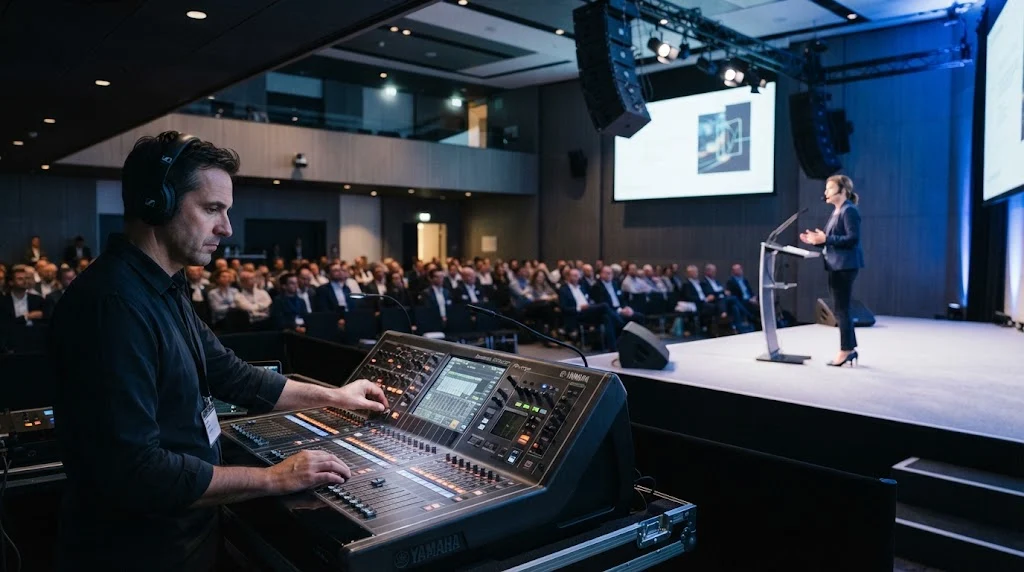
From carefully selected music to reliable sound equipment and coordinated event production, an effective audio strategy can help a business create atmosphere without distracting from its core message. This guide explores how immersive audio can support business experiences and what to consider when planning professional sound entertainment.
What Is Sound FX Entertainment?
Sound FX Entertainment is associated with professional entertainment and event-production services, including sound, music, lighting, and audiovisual solutions. Its service model illustrates how businesses can combine technical production with entertainment to create more engaging environments.
For companies organizing corporate events, private functions, weddings, launches, or customer experiences, sound is often one of the most noticeable elements of the overall production. A poorly balanced system can make speeches difficult to understand, while a properly planned setup can make an event feel coordinated and professional.
This makes professional audio relevant to both entertainment-focused occasions and business communication.
Why Audio Matters in Business Experiences
Audio influences how people perceive a physical environment. Background music can establish atmosphere, announcements can direct attention, and high-quality microphones can make presentations easier to follow. During an event, these elements work together rather than functioning as isolated technical components.
Businesses can therefore treat audio as part of their wider experience strategy. A technology demonstration, product launch, networking event, hospitality gathering, or company celebration may require different sound levels, equipment, music selections, and production approaches.
The objective should not simply be to make an event louder. The goal is to make the audio appropriate for the space, audience, activity, and brand.
Professional Sound for Corporate Events
Corporate events often combine several activities within the same schedule. A typical program may include introductions, keynote presentations, panel discussions, videos, networking sessions, background music, and closing entertainment.
Professional sound planning helps these transitions happen smoothly. Microphone selection, speaker placement, audio mixing, playback equipment, and volume management all contribute to the experience.
Businesses can also connect event audio with their broader digital marketing strategies. When an event is recorded or streamed, clear audio becomes important beyond the physical venue because recordings may later appear across digital channels.
Creating Atmosphere With Music
Music can help define the atmosphere of a venue, but successful programming requires more than simply creating a playlist. The style, tempo, volume, and timing should reflect the purpose of the event.
A professional entertainment setup can help businesses move between different moments of an event. Background music may support networking, while a stronger musical presentation can accompany a celebration or evening function.
Businesses interested in the wider entertainment landscape can also explore Sony Music Entertainment Japan and YouTube to understand how music and digital platforms intersect.
Sound and Lighting Work Together
Audio rarely operates independently during a professional event. Lighting, visual displays, stage design, and entertainment can all contribute to the same atmosphere.
A coordinated production can make presentations easier to follow and create clear transitions between business and entertainment segments. This is especially relevant for venues where a single space needs to support presentations during the day and social activities later.
Entertainment-focused destinations also demonstrate how multiple sensory elements can work together. Related examples can be found in our coverage of Burlington riverfront entertainment and Dockside entertainment experiences.
Applications Beyond Traditional Events
Immersive audio is not limited to weddings or corporate parties. Businesses can consider professional sound solutions for product demonstrations, hospitality environments, exhibitions, retail activations, promotional gatherings, conferences, and customer engagement activities.
For example, a brand launching a new product may use carefully timed music and announcements to support the presentation. A hospitality business may use background music to establish a particular mood. An exhibition can use targeted audio to attract attention while guiding visitors toward specific displays.
Entertainment technology can also support experiences that blend physical and digital interaction. Businesses developing such strategies may benefit from considering the principles discussed in custom digital platforms for arts and entertainment.
Sound FX Entertainment for Weddings and Social Functions
Although business events are an important application for professional audio, entertainment services also play a major role in weddings and private functions. Music, microphones, announcements, and lighting can help coordinate different stages of an event.
Transportation, venue access, schedules, and entertainment frequently need to work together. Our guide to wedding transportation planning provides another example of how event logistics extend beyond the main entertainment program.
The same planning principle applies to corporate functions: audio should be integrated into the complete event schedule rather than treated as an afterthought.
Choosing the Right Audio Setup
The right equipment depends on several practical factors. Businesses should consider:
- Venue size and layout
- Expected audience capacity
- Indoor or outdoor conditions
- Speech and presentation requirements
- Music and entertainment needs
- Microphone requirements
- Playback and audiovisual equipment
- Lighting and staging requirements
- Event duration and schedule
- Technical support requirements
There is no single audio configuration that works for every event. A small networking session may require a relatively simple setup, while a large corporate production can involve multiple microphones, speakers, playback sources, stage monitoring, and audiovisual equipment.
Audio Quality and Brand Perception
Technical quality can influence how professionally an event is perceived. Distorted music, feedback, inconsistent volume, or difficult-to-hear speakers can interrupt the audience experience.
Clear audio, by contrast, allows people to focus on the content of an event instead of the equipment producing it. This becomes particularly important when a business is presenting products, communicating corporate information, or hosting clients and partners.
Audio should therefore be considered alongside broader small-business growth strategies and customer-experience planning.
Immersive Audio and Customer Engagement
Immersive audio does not necessarily mean using complicated technology. It can simply mean designing sound intentionally so that it complements what customers are seeing and doing.
At a promotional event, for example, music can help create energy before a presentation begins. During a demonstration, carefully controlled sound effects can reinforce visual elements. At a networking event, appropriate background music can support the atmosphere without overwhelming conversations.
The key is balance. Effective audio should support the experience rather than compete with it.
Entertainment as Part of Business Marketing
Events can also become part of a company’s wider marketing strategy. A memorable launch or customer gathering may generate photographs, videos, social posts, interviews, and other content that continues to reach audiences after the event.
This creates a connection between physical event production and online marketing. Businesses developing this approach can explore broader ideas around digital marketing and business excellence as well as advertising and marketing growth.
Entertainment Trends and Modern Audiences
Modern audiences increasingly encounter entertainment through multiple channels. Live events, video platforms, podcasts, social media, streaming services, and digital experiences can all influence expectations around production quality.
Our coverage of podcast meet-and-greet events illustrates another environment where planning, audience interaction, and entertainment can overlap.
For businesses, this means that an event can be designed with both the people physically attending and the people who may eventually experience the event through digital content in mind.
Sound FX Entertainment and the Value of Professional Planning
Professional entertainment planning brings together creative decisions and technical requirements. Instead of choosing equipment independently, businesses can consider the complete event journey: arrival, introductions, presentations, networking, entertainment, announcements, and closing moments.
This approach can reduce technical surprises and create smoother transitions. It also makes it easier to coordinate sound with lighting, visuals, presenters, performers, and venue staff.
Businesses exploring entertainment as part of their customer strategy may also find useful ideas in our article about premium entertainment experiences.
How to Plan an Immersive Audio Experience
- Define the purpose: Decide whether the audio is primarily for communication, atmosphere, entertainment, or a combination.
- Evaluate the venue: Consider room size, acoustics, seating arrangements, entrances, stages, and outdoor conditions.
- Map the event schedule: Identify when speeches, music, videos, performances, and announcements will occur.
- Choose suitable equipment: Match microphones, speakers, mixers, playback systems, and other equipment to the event.
- Coordinate production: Align sound with lighting, visuals, staging, and other event elements.
- Test before guests arrive: Sound checks can identify volume, microphone, connectivity, and placement problems early.
- Plan for transitions: Prepare playlists, announcements, cues, and backup options before the event begins.
Sound, Entertainment, and the Bigger Business Picture
Audio is one component of a larger customer and brand experience. Businesses can combine professional entertainment with event marketing, digital campaigns, social media content, hospitality, and customer engagement.
For companies focused on long-term growth, the connection between experiences and marketing can be especially useful. Related resources on scaling business services, digital marketing ROI for business services, and the economic impact of digital marketing provide broader context for how business activities can connect with growth strategies.
Frequently Asked Questions
What does Sound FX Entertainment provide?
Sound FX Entertainment is associated with event and entertainment solutions involving areas such as sound, music, lighting, and audiovisual production. The exact service package depends on the event and its requirements.
Why is professional audio important for business events?
Professional audio can improve speech clarity, music quality, announcements, and overall event coordination. It helps audiences focus on the event instead of technical distractions.
Can immersive audio be used outside corporate events?
Yes. Audio production can support weddings, private functions, hospitality experiences, launches, exhibitions, networking events, and other customer-facing activities.
How should a business choose an event sound system?
Start with the venue, audience size, event schedule, speech requirements, music needs, and audiovisual components. Equipment should be selected according to the actual environment rather than using a one-size-fits-all setup.
Does sound work together with event lighting?
Yes. Sound and lighting can be coordinated to create consistent transitions between presentations, entertainment, performances, and other parts of an event.
Conclusion
Sound FX Entertainment highlights an important principle of modern event production: sound can be an active part of an experience rather than simply background support. Businesses can use professional audio, music, lighting, and audiovisual planning to improve communication, atmosphere, and audience engagement.
The most effective approach begins with the event’s purpose and audience. Once those fundamentals are clear, businesses can select appropriate equipment, coordinate production elements, and create an audio environment that supports the brand experience from beginning to end.