Cranial Technologies Mesa: DOC Band & Infant Head Shape Care Guide
Cranial Technologies Mesa provides specialized care focused on infant head shape concerns, including plagiocephaly and related cranial asymmetry. Rather than approaching cranial care as a general “brain health” service, it is more accurate to understand the Mesa location as a specialized clinic associated with cranial remolding orthosis care.
The Mesa clinic uses Digital Surface Imaging technology as part of its assessment process and provides access to the DOC Band, a custom cranial remolding orthosis used for appropriate cases of infant plagiocephaly. For parents researching treatment options, understanding what the clinic does, how evaluations work, and what questions to ask can make the process much easier.
What Is Cranial Technologies Mesa?
Cranial Technologies Mesa is a Mesa, Arizona, clinic serving families who need evaluation and treatment related to infant head shape. The clinic is located at 1500 S. Dobson Rd., Suite 315, Mesa, AZ 85202.
The clinic’s focus is different from a general neurology or adult “brain optimization” center. Its services are centered on cranial orthotic care, particularly treatment of deformational head-shape conditions in infants.
For parents researching broader healthcare options, resources such as Trinity Health Williston can provide useful context about how specialized healthcare services fit into a larger care system.
What Conditions Does Cranial Technologies Address?
One of the primary conditions associated with cranial remolding therapy is plagiocephaly, commonly described as flat head syndrome. Infant skulls are naturally soft and can change shape when consistent external pressure is applied to one area.
Head-shape differences can have a variety of causes. Positioning, time spent on the back, limited movement of the head, premature birth, multiple births, and conditions such as torticollis can all be relevant factors. A healthcare professional should determine the cause and severity rather than parents attempting to diagnose the condition themselves.
It is also important to distinguish deformational plagiocephaly from craniosynostosis. These are not the same condition, and the treatment approach can be very different. Cranial Technologies states that the DOC Band is not used to treat craniosynostosis, although helmet therapy may sometimes be considered after surgical correction when medically appropriate.
How the DOC Band Works
The DOC Band is a cranial remolding orthosis designed around an individual baby’s head shape. Instead of simply covering the head, the orthosis is designed to apply gentle holding pressure to selected areas while allowing natural growth to continue in areas where additional development is desired.
This approach is intended to guide the developing skull toward a more symmetrical shape over time. Because every infant has a different head shape and growth pattern, treatment should be individualized rather than based on a generic helmet size or one-size-fits-all approach.
The DOC Band is also a regulated medical device and requires a prescription from an appropriate medical provider before treatment can begin.
Why Digital Surface Imaging Matters
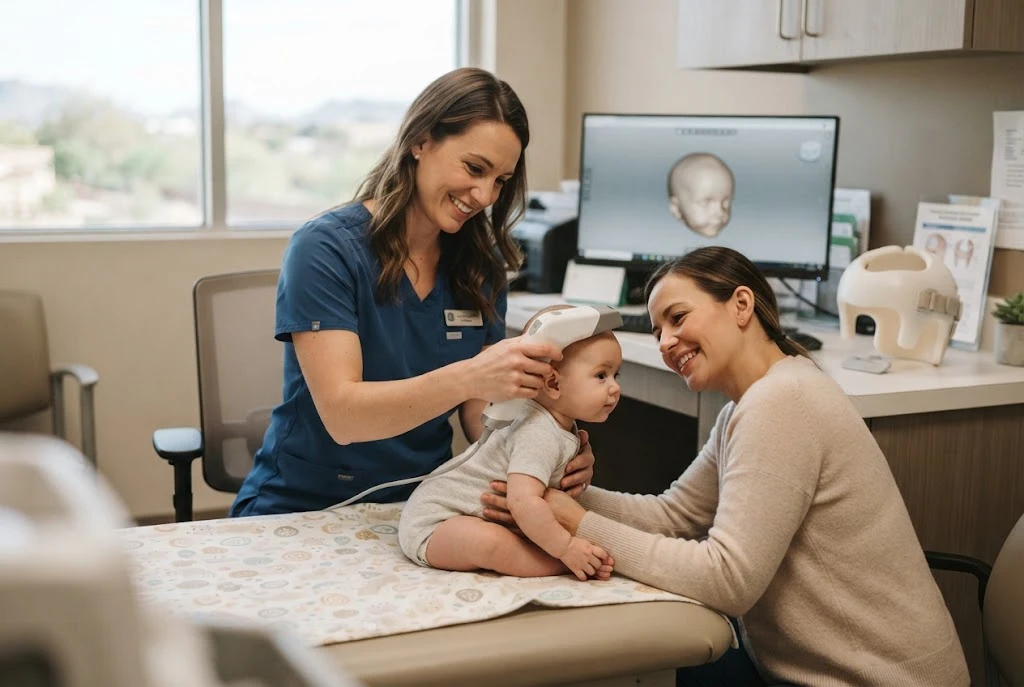
A key part of the Cranial Technologies approach is Digital Surface Imaging (DSI). The technology creates a three-dimensional representation of an infant’s head shape, giving the clinical team detailed information that can be used when evaluating cranial asymmetry.
For parents, the value of 3D imaging is its ability to provide a measurable representation of head shape rather than relying solely on visual observation. This can help clinicians assess the areas affected by asymmetry and determine whether cranial orthotic treatment is appropriate.
Digital tools are increasingly important across modern healthcare environments. For example, medical logistics technology demonstrates how specialized digital systems can support healthcare operations, while imaging technology can support assessment and clinical decision-making in other settings.
What Happens During a Mesa Evaluation?
Parents considering Cranial Technologies Mesa generally begin with an evaluation rather than immediately receiving a helmet. The evaluation gives the clinical team an opportunity to understand the baby’s head shape and determine whether treatment may be appropriate.
1. Initial Assessment
The clinical team reviews the baby’s head shape, medical background, and relevant developmental information. Parents can use this appointment to explain when they first noticed asymmetry and whether their pediatrician has already evaluated the child.
2. Head Shape Imaging
Digital Surface Imaging can be used to create a detailed three-dimensional representation of the baby’s head. This information helps the team evaluate the shape and determine the appropriate course of action.
3. Treatment Discussion
If cranial remolding therapy is appropriate, the clinical team can explain the treatment process, expected responsibilities, fitting considerations, and follow-up requirements. Parents can then make an informed decision with their healthcare provider.
4. Custom Orthosis
When treatment proceeds, the DOC Band is custom-designed for the baby’s head shape. This individualized approach is important because cranial asymmetry varies significantly between infants.
How Long Does DOC Band Treatment Take?
Treatment duration can vary depending on the baby’s age, head shape, severity of asymmetry, growth rate, and individual response to treatment. Cranial Technologies describes treatment periods that can span several weeks rather than suggesting that every infant requires the same amount of time.
Parents should therefore avoid comparing one child’s treatment schedule directly with another child’s experience. The clinical team can provide a more appropriate estimate after evaluating the infant.
Why Age Can Matter in Cranial Remolding
Timing is an important consideration because an infant’s skull changes rapidly during early development. The appropriate treatment window depends on the individual child, and earlier evaluation may give families more opportunity to discuss available options.
This does not mean that every infant with a flat spot automatically needs a helmet. Mild positional changes can sometimes improve with repositioning and other recommendations from a pediatric healthcare professional. The decision to use a cranial orthosis should be based on the child’s specific circumstances.
DOC Band and Infant Comfort
Parents naturally have questions about whether their baby will be comfortable wearing a cranial orthosis. The DOC Band is designed specifically for infant use and is custom-made according to the baby’s head shape.
Parents should follow the clinic’s instructions for wearing, cleaning, skin checks, and follow-up appointments. Any persistent skin irritation, unusual discomfort, or other concern should be discussed with the treating clinical team rather than handled through independent adjustments.
What Parents Should Ask Before Treatment
A consultation is an opportunity to understand both the benefits and responsibilities associated with cranial remolding therapy. Consider asking:
- What type of head-shape condition does my baby have?
- How severe is the asymmetry?
- Could repositioning or another conservative approach be appropriate?
- Does my baby need a prescription before treatment?
- How does the DOC Band fit my baby’s specific head shape?
- How frequently are follow-up appointments required?
- What signs of skin irritation should I watch for?
- How long might treatment take based on my baby’s age and condition?
- What expenses may be covered by insurance?
- What should I do if the helmet appears uncomfortable?
Families who are also navigating broader health-related services may find resources such as health insurance guidance useful when preparing questions about coverage and medical expenses.
Understanding Insurance and Treatment Costs
Coverage for cranial orthotic treatment can vary significantly by insurance provider, plan, medical necessity requirements, and location. A parent should not assume that every insurance policy treats cranial remolding therapy in the same way.
Before beginning treatment, ask the clinic and insurance provider about documentation requirements, prescription requirements, deductibles, copayments, prior authorization, and any applicable coverage limitations.
For general healthcare planning, related topics such as family health services and health and wellness care can also help families understand the broader healthcare landscape.
Cranial Technologies Mesa Location
The Mesa clinic is located at:
Cranial Technologies Mesa
1500 S. Dobson Rd., Suite 315
Mesa, AZ 85202
The clinic provides on-site parking. Published office hours include weekday appointments, with opening and closing times varying by day. Because clinic schedules can change, families should confirm the current schedule directly when arranging an appointment.
The Clinical Team
The Mesa location lists clinical professionals with backgrounds in orthotics and occupational therapy. This multidisciplinary perspective is relevant because cranial orthotic care involves more than producing a physical device; it also involves evaluating the infant’s head shape and supporting the family throughout the treatment process.
Parents should view the clinic team as part of a broader healthcare network. Their child’s pediatrician or other qualified medical provider remains an important part of evaluating developmental and medical concerns.
This broader approach is similar to the way families may coordinate specialized services with general healthcare providers, as discussed in health and wellness services.
Cranial Technologies vs. General Brain Health Services
The wording “brain health” can sometimes create confusion when researching Cranial Technologies. The Mesa clinic should not be presented as a general neurological performance center or a provider of treatments for adult migraines, cognitive fatigue, balance problems, or generalized neurological conditions.
Its documented focus is much more specific: cranial shaping orthoses and infant plagiocephaly treatment.
This distinction matters for searchers because medical terminology can easily become misleading when a specialized pediatric orthotic service is described too broadly. Families should evaluate the clinic according to the actual services it provides and their child’s specific medical needs.
How Cranial Care Fits Into Broader Pediatric Healthcare
Head-shape concerns are only one part of infant and pediatric healthcare. Depending on the child, parents may also coordinate care involving pediatricians, physical therapists, occupational therapists, specialists, and other healthcare professionals.
For families researching different types of healthcare services, HorizonNote also covers topics such as physical therapy services, healthcare professionals and careers, and specialized health-related fields.
What Makes the Mesa Clinic Relevant to Local Families?
For families in Mesa and the surrounding Phoenix metropolitan area, having access to a dedicated cranial orthotic clinic can simplify the process of evaluation and follow-up. Local access matters because treatment may involve multiple appointments as the baby grows and the orthosis is monitored.
The Mesa location is also part of a broader network of Cranial Technologies clinics. Families who live farther away may have additional clinic options, depending on where they live and what services are available.
Preparing for Your Appointment
Parents can make an evaluation more productive by preparing a short record of their baby’s medical history and head-shape concerns.
- Note when the flat spot or asymmetry was first noticed.
- Bring relevant medical records if requested.
- Know the names of healthcare providers who have evaluated the baby.
- Write down questions about treatment and follow-up.
- Bring insurance information.
- Ask about prescription requirements before treatment.
- Discuss any concerns about positioning, torticollis, or developmental issues with the child’s healthcare provider.
Families dealing with multiple healthcare arrangements may also benefit from understanding how healthcare organizations manage services and resources, including topics covered in health-related resource management and home health services.
Frequently Asked Questions About Cranial Technologies Mesa
Is Cranial Technologies Mesa a brain health clinic?
It is more accurate to describe the Mesa location as a specialized cranial orthotic clinic focused on infant head-shape conditions. It should not be confused with a general adult neurological or brain-performance clinic.
What is the DOC Band?
The DOC Band is a custom cranial remolding orthosis designed to gently redirect an infant’s natural head growth in appropriate cases of plagiocephaly and related head-shape asymmetry.
Does a baby need a prescription?
Yes. Cranial Technologies states that a prescription from a physician or other approved medical provider is required before DOC Band treatment can begin.
Does every flat spot require a helmet?
No. The need for cranial remolding depends on the individual baby’s head shape, age, severity, growth, and medical assessment. Parents should discuss persistent or significant asymmetry with a qualified healthcare professional.
Can the DOC Band treat craniosynostosis?
No. Cranial Technologies specifically states that the DOC Band is not used to treat craniosynostosis. Post-surgical helmet therapy may sometimes be part of care when medically appropriate.
How is the baby’s head measured?
Cranial Technologies uses Digital Surface Imaging to create a three-dimensional representation of the baby’s head shape. This information can support evaluation and custom orthosis design.
Where is Cranial Technologies Mesa located?
The Mesa clinic is located at 1500 S. Dobson Rd., Suite 315, Mesa, Arizona 85202.
Should parents choose treatment based on online testimonials?
Online experiences can provide context, but they should not replace professional medical evaluation. Every infant’s head shape and treatment needs are different, so parents should prioritize advice from qualified healthcare providers and the clinical team evaluating their child.
Final Thoughts on Cranial Technologies Mesa
Cranial Technologies Mesa is best understood as a specialized resource for infant cranial orthotic care rather than a general brain-health or neurological performance center. Its documented services include evaluation of infant head shape, Digital Surface Imaging, and custom DOC Band cranial remolding therapy for appropriate cases.
For parents concerned about plagiocephaly or another head-shape difference, the most useful next step is not to assume that a helmet is necessary. Instead, discuss the concern with the child’s healthcare provider, obtain an appropriate evaluation, and ask detailed questions about the potential benefits, responsibilities, costs, and expected treatment process.
Approaching cranial care with accurate expectations and professional guidance gives families a clearer foundation for making decisions that are appropriate for their child.