For companies managing cross-border commerce or growing order volumes, the right logistics strategy is about more than moving a shipment from one location to another. It involves coordinating inventory, transportation, storage, documentation, delivery schedules, and customer expectations as one connected process. This guide explains the role of FBB Logistics, the supply chain functions associated with its services, and the factors businesses should evaluate when choosing a logistics partner.
Understanding FBB Logistics and Its Role in Supply Chain Management
FBB Logistics operates within the broader third-party logistics and e-commerce fulfillment landscape, where businesses can outsource important parts of their logistics operations instead of managing every transportation and warehousing function internally.
A capable logistics partner can help coordinate several stages of the product journey. Depending on the service model, that can include receiving inventory, storing products, preparing orders, arranging transportation, tracking shipments, processing returns, and supporting distribution.
This integrated approach matters because problems in one part of a supply chain can quickly affect another. Poor inventory visibility can lead to fulfillment delays. Inefficient transportation planning can increase costs. Slow communication can make it harder for businesses to respond when a shipment changes status.
Businesses researching different logistics providers can also compare the approaches discussed in Yugos Logistics LLC and global supply chain operations and Shoa Logistics LLC’s freight solutions to understand how different logistics models address transportation and supply chain requirements.
Key Logistics Functions Businesses Need
Modern logistics is made up of several connected functions rather than a single transportation service. The exact combination depends on a company’s products, sales channels, destinations, order volume, and fulfillment strategy.
Warehousing and Inventory Management
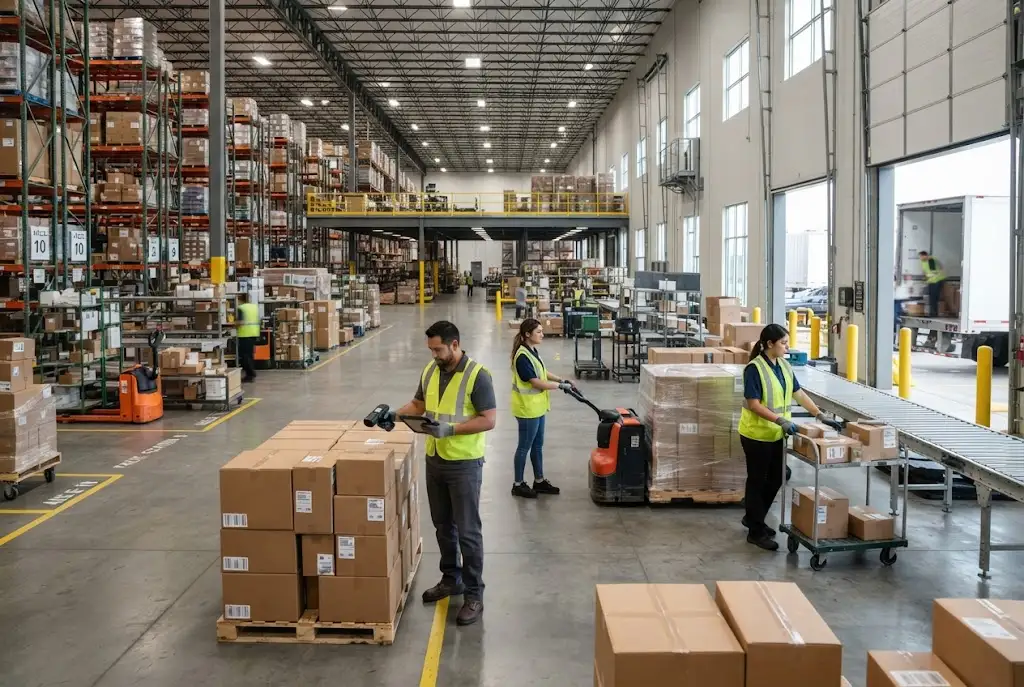
Warehousing provides the physical foundation for fulfillment. Products need to be received, organized, stored, picked, packed, and prepared for their next destination.
Good inventory management also helps businesses maintain better visibility into available stock. Accurate inventory information can reduce avoidable fulfillment problems and make replenishment planning easier.
For organizations interested in the wider relationship between inventory and operational efficiency, inventory management principles and resource optimization provide a useful broader perspective, even though the application varies by industry.
Freight and Transportation Coordination
Transportation connects warehouses, suppliers, distribution centers, retailers, marketplaces, and customers. Depending on the shipment, businesses may require different combinations of ground, air, ocean, or other freight services.
Transportation planning should consider factors such as delivery requirements, shipment characteristics, destination, carrier options, handling requirements, and overall cost. The objective is not simply to choose the fastest route but to find a practical balance between speed, reliability, and expense.
Businesses exploring different freight approaches can also review global freight solutions from Citynet Logistics as part of their broader research.
Order Fulfillment
Fulfillment connects inventory with customer demand. Once an order is received, the process may involve locating the correct inventory, picking the products, packing the shipment, generating shipping information, and handing the package to a carrier.
For e-commerce businesses, fulfillment becomes especially important as order volume grows. A process that works for a small number of daily orders may become difficult to manage manually when sales increase across multiple marketplaces or regions.
Reverse Logistics and Returns
Returns are another important part of the supply chain. Products may need to be received back at a facility, inspected, categorized, restocked, repaired, recycled, or otherwise processed according to the business’s policies.
A well-organized reverse logistics process can help businesses avoid unnecessary inventory confusion while giving customers a clearer experience when a return is required.
Technology and Visibility in Modern Logistics
Technology has changed how businesses monitor and coordinate supply chain operations. Digital systems can provide information about inventory, orders, shipment status, and fulfillment activity, helping teams make decisions using current operational information.
Tracking technology is particularly valuable when a business has shipments moving through several stages. Instead of relying entirely on manual communication, digital tracking can provide status information that helps logistics teams identify potential problems earlier.
Technology can also connect logistics operations with e-commerce platforms, inventory systems, warehouse management tools, and other business software. The goal is to reduce unnecessary manual work and create a more consistent flow of information.
How FBB Logistics Can Support E-Commerce Operations
E-commerce businesses face a distinctive logistics challenge: customers expect products to move quickly while sellers need to control fulfillment costs and maintain accurate inventory.
A logistics provider can help by handling operational tasks that would otherwise consume significant internal resources. This can be particularly useful for businesses selling across multiple channels or serving customers in different geographic markets.
For example, an e-commerce operation may need to coordinate supplier inventory with a U.S. warehouse, process customer orders, prepare packages, provide shipment tracking, and manage returns. Bringing these activities into a coordinated logistics workflow can make growth easier to manage.
Businesses can also explore related logistics topics through logistics technology for specialized transportation operations, particularly when delivery coordination depends on accurate driver and shipment information.
Why Supply Chain Visibility Matters
Supply chain visibility means having a clearer understanding of what is happening across inventory, fulfillment, transportation, and delivery activities.
Without adequate visibility, businesses can struggle to answer basic operational questions. Where is an order? Has inventory arrived? Which shipments are delayed? Is available stock sufficient? Has a return been processed?
Better visibility helps teams identify these issues sooner. It can also support better planning because managers have more information available when deciding how to allocate inventory, organize shipments, or adjust fulfillment processes.
This principle extends beyond traditional logistics. Even specialized transportation operations, such as those discussed in logistics and travel-distance optimization, depend on understanding how transportation choices affect operational efficiency.
Balancing Logistics Speed and Cost
Speed is important, but faster transportation is not automatically the most efficient solution. Businesses need to evaluate the total cost of fulfilling an order, including transportation, storage, handling, packaging, returns, and other operational expenses.
Route planning, shipment consolidation, inventory positioning, and carrier selection can all influence the final logistics cost. A company that consistently chooses expensive expedited shipping may achieve faster delivery while creating unnecessary pressure on its margins.
A stronger approach is to match service levels with customer expectations and product requirements. Some orders may require faster transportation, while others can move through a more economical service without negatively affecting the customer experience.
Reliability and Communication in Logistics
Reliable logistics depends on more than physical transportation. Communication is equally important.
When a shipment experiences a delay, businesses need timely information so they can make decisions and communicate with customers. When inventory arrives, warehouse teams need accurate information about what was received and where it should be stored. When a return is initiated, the relevant teams need visibility into its status.
This is why logistics providers should be evaluated not only on transportation capabilities but also on operational processes, communication, tracking, customer support, and the ability to handle exceptions.
The broader HorizonNote logistics category includes other supply-chain-focused resources such as medical transport logistics, global freight operations, and freight solution planning.
What Businesses Should Evaluate Before Choosing a Logistics Provider
FBB Logistics may be relevant to businesses researching outsourced logistics and fulfillment, but every company should evaluate a provider against its own operational requirements before making a decision.
Important considerations include:
- Service coverage: Determine which logistics functions the provider actually handles.
- Warehouse capabilities: Review storage, receiving, picking, packing, and inventory processes.
- Technology: Check whether tracking and inventory systems provide the visibility your business needs.
- Integration: Consider compatibility with marketplaces, e-commerce platforms, order systems, and inventory tools.
- Transportation: Evaluate available shipping and freight options for your destinations.
- Returns: Understand how returned products are received, inspected, processed, and reported.
- Scalability: Make sure the provider can support changes in order volume and geographic reach.
- Communication: Establish how shipment issues, delays, inventory discrepancies, and other exceptions are handled.
- Pricing: Compare the full cost structure rather than focusing only on the transportation rate.
- Compliance: Confirm that the logistics process fits the regulatory and documentation requirements of your products and markets.
FBB Logistics and the Importance of Scalable Operations
As businesses grow, logistics often becomes more complex. More customers can mean more orders, more inventory locations, more transportation requirements, and more opportunities for delays or errors.
A scalable logistics model should therefore be capable of adapting to changing demand. This does not necessarily mean choosing the largest provider. It means selecting a logistics structure that fits the company’s products, sales channels, geography, service expectations, and growth plans.
For businesses comparing logistics providers, the related global supply chain perspective from Yugos Logistics LLC can help broaden the comparison beyond a single provider or service model.
Common Questions About FBB Logistics
What is FBB Logistics?
FBB Logistics refers to logistics and fulfillment operations designed to help businesses coordinate activities such as warehousing, transportation, inventory handling, order fulfillment, and related supply chain functions.
Why is logistics important for e-commerce businesses?
Logistics connects inventory to customers. Efficient fulfillment can help businesses process orders consistently, maintain inventory visibility, coordinate deliveries, and manage returns as sales volumes grow.
What should I consider when comparing logistics providers?
Compare service coverage, warehouse capabilities, technology, transportation options, integrations, returns processing, scalability, communication, pricing, and compliance requirements.
Does faster shipping always mean better logistics?
No. The best logistics strategy balances delivery speed with reliability, customer expectations, inventory positioning, and total fulfillment cost.
Why is shipment tracking important?
Tracking provides visibility into shipment status and can help businesses respond more quickly when delays, routing changes, or other delivery issues occur.
Can third-party logistics help a growing online business?
Yes. Outsourcing selected logistics functions can allow a growing business to delegate warehousing, fulfillment, transportation coordination, and related operational tasks instead of building every capability internally.
Final Takeaway
Effective logistics is ultimately about creating a dependable connection between suppliers, inventory, warehouses, transportation networks, businesses, and customers. FBB Logistics fits into this broader supply chain landscape by focusing on the operational functions businesses need to move and manage goods efficiently.
For companies evaluating logistics solutions, the most important step is to look beyond a single shipping service and assess the entire fulfillment process. Technology, inventory visibility, transportation coordination, warehousing, returns, communication, scalability, and cost all contribute to the quality of a logistics operation.
By comparing these factors carefully and selecting services that match actual business requirements, companies can build a more resilient supply chain while creating a better foundation for sustainable growth.