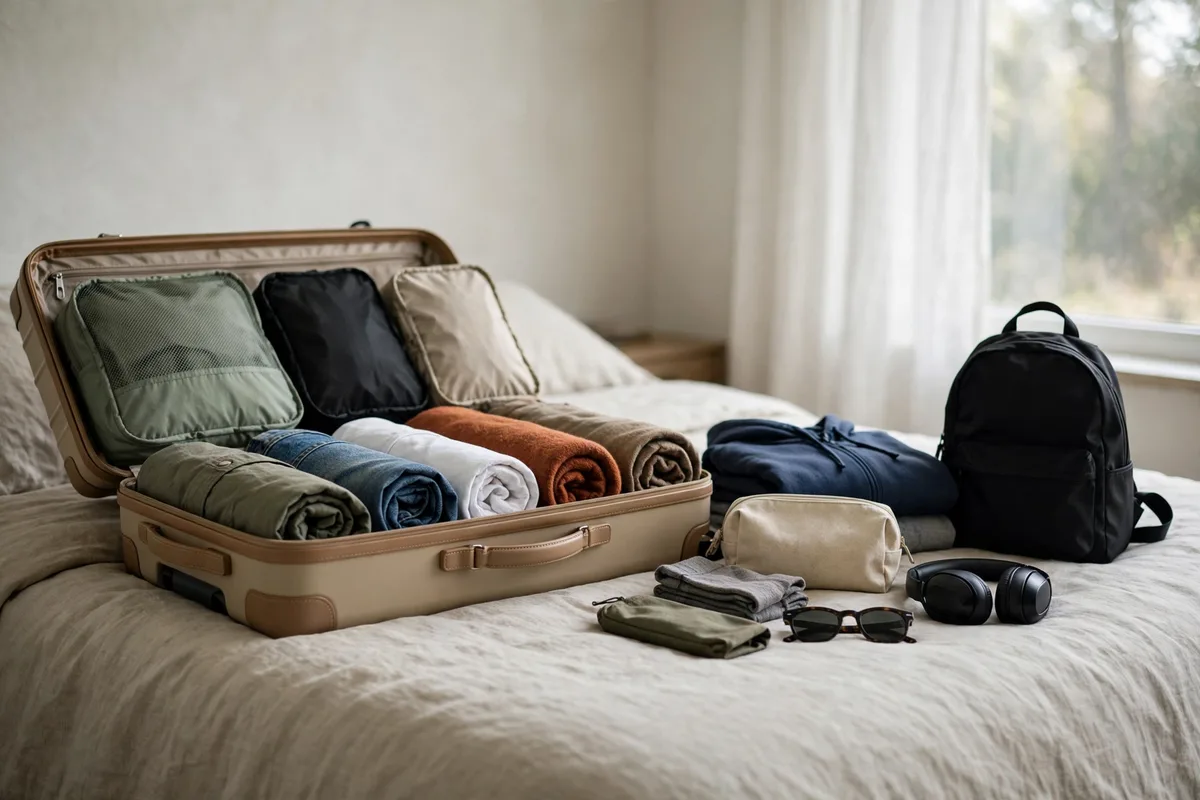
Every long trip has a moment of packing truth: the bag that felt roomy at home somehow will not close, or the one thing you actually need is buried under everything you do not. Packing well is not about owning special gear — it is about decisions made calmly before you leave, so that the bag you carry serves the trip instead of running it. These smart packing tips for a long trip will help you travel lighter, find things faster and arrive with clothes that still look like clothes, whether you are away for two weeks or two months.
Start With a List, Not a Suitcase
The single best packing habit is writing the list first and packing second. Note what you will actually do each day — walking, swimming, working, dressing up once — and pack for those activities rather than imagined emergencies. Then lay everything out and remove a third of it; almost everyone overpacks on the first pass. Choose a colour palette so that every top works with every bottom, and favour fabrics that resist wrinkles, dry quickly and do not hold odours. If an item only works in one outfit and only might be worn, it stays home. Travellers heading out alone for the first time will find the same plan-first philosophy runs through our solo travel tips for first-time travellers.
Choose the Right Bag and Use Every Corner
Your bag should match your route. Wheeled cases suit city trips and smooth pavements; a travel backpack wins on cobbles, stairs and rural stations — think of the canal bridges in our guide to wandering the canals of Venice, where wheels go to die. Inside the bag, packing cubes are the closest thing to a packing superpower: one for tops, one for bottoms, one for underwear and small items, so you can find anything in seconds and repack in minutes. Roll soft clothes to save space and reduce creases, fold structured items flat, and fill dead corners — shoes stuffed with socks or chargers, gaps along the edges filled with belts and scarves. Wear your bulkiest items on travel days rather than packing them.
The Personal Item: Your Trip’s Command Centre
Whatever goes wrong — a delayed connection, a bag that takes the scenic route — your personal item should keep the trip alive for twenty-four hours. Keep documents, money, cards, phone and charger, essential medication, a change of underwear and a fresh top, basic toiletries in a clear bag, headphones, a water bottle and any valuables in the bag that stays with you. Add a pen for landing forms and a photograph of your documents saved on your phone. This small discipline turns most travel mishaps from crises into inconveniences, and it matters even more on multi-stop journeys like road tripping the Ring Road in Iceland, where your next shop may be hours away.
Toiletries, Tech and the Small Things
Decant toiletries into small bottles — nobody needs five hundred millilitres of shampoo — and remember that solid options (shampoo bars, solid toothpaste tabs) dodge liquid limits entirely and never leak. Buy bulky consumables like sunscreen at your destination. For tech, standardise cables where you can, carry one multi-port charger and the right plug adapters, and add a small power bank for long travel days. A tiny repair kit earns its space: a few safety pins, a needle and thread, spare buttons, pain relief, plasters and any personal essentials. Photograph your bag’s contents before you close it; if anything is lost or you need to make a claim, that picture is worth a page of description.
Laundry: The Secret to Packing Half as Much
The real unlock for long trips is washing as you go. Pack for seven to ten days and do laundry weekly instead of hauling a month of clothes: use hotel sinks with travel detergent for small items, laundromats for full loads, or laundry services where they are affordable. Quick-dry underwear and socks designed for travel can be washed at night and worn again within a day. This one habit halves your bag, which in turn makes trains, stairs, small guesthouses and spontaneous detours easier — the whole trip gets lighter, literally and otherwise. It is the same slow-travel logic that rewards lingering in places like those in finding peace in the heart of Bali: carry less, rush less, notice more.
Packing for Different Climates and Trip Styles
One bag rarely fits every itinerary. A beach trip forgives almost any packing style, but a multi-country journey crossing seasons demands strategy: a warm layer that compresses small, a rain shell that doubles as a windbreaker, and shoes broken in before departure, never during it. Business travellers should build around one suit or outfit core and rotate shirts, while adventure trips reward carrying duplicates only of what gets wet or dirty daily — socks and underwear — and singles of everything else. Families benefit from one shared bag for communal items (sun cream, chargers, snacks) so individual bags stay simple. Whatever your style, the palette rule saves you: if every piece matches everything else, ten items quietly become twenty outfits, and the bag stays half the size of the wardrobe you left at home.
The Final Check Before You Zip Up
The night before departure, walk your list once more. Documents valid and in place? Money and cards split between two spots? Chargers packed, liquids bagged, bag within the weight limit — actually weigh it, because airline scales are unforgiving and your arms will thank you on the stairs. Zip a small empty tote inside the top for souvenirs and dirty laundry, and leave a little space: every long trip brings something home. Then close the bag and stop reorganising. A well-packed bag will not make a trip wonderful on its own, but it removes a hundred small frictions — and what remains is the journey you actually came for.